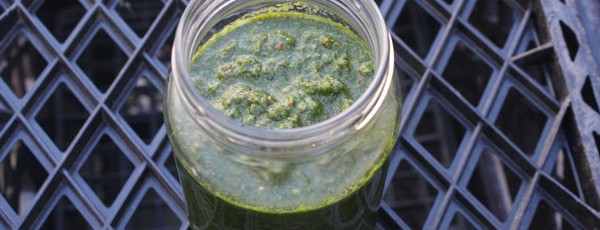
In New Mexico, Chile is king. No questions. No debate. Red, or green? Christmas? (Christmas is both red and green.)
(If you want just the recipe, see it here.)
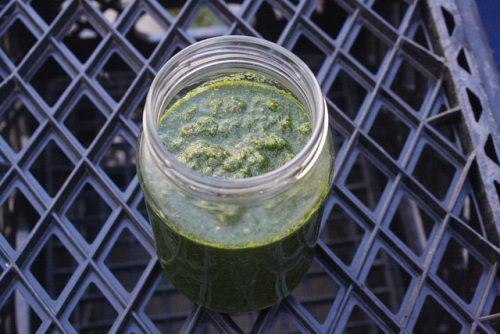
Zhug, after the cilantro and jalapenos and citrus and salt have been blended together. Ready for some fiery consumption.
Cilantro certainly plays a second fiddle, in salsa, as do tomatoes, but still: chile, cilantro, these are the building blocks of many New Mexican meals. So, what does that have to do with zhug? Well, combine those two things into one dish. Blew your mind, didn’t it?
Chile and cilantro are not the sole property of New Mexican cuisine and lots of other cultures do complimentary things with them that I think we should all copy, or at least, pay attention to.
That New Mexico can learn a lot from other parts of the world, including from the middle-east, where zhug originated.
What is zhug, anyway?
It can either be described as a cilantro-based hot sauce (and, depending on how you make it, I mean Hot) or as chile and cilantro pesto. Take your pick. I prefer the former, partially because I make mine scalding.
It’s a very simple sauce. Put cilantro, lemon juice, lime juice and, important here, peppers, into a blender. Blend. Blend, blend, blend.
That’s it. Maybe add some salt, to taste. And you’re done. It’s a pesto-like hot sauce or a hot pesto. Either way, zhug goes well with pita bread and tabbouleh, with some hummus. Maybe you’re going to make zucchini fritters. Add some on the side, along with tzatziki.
I should add, this sauce is very dear to my heart. Being such a fan of cilantro, even naming my blog after a proclivity for it, I gotta say. We all should love zhug.
If you want the full gallery of full-quality photos, they are licensed under a Creative Commons 2.0 Attribution-only license. See them here.
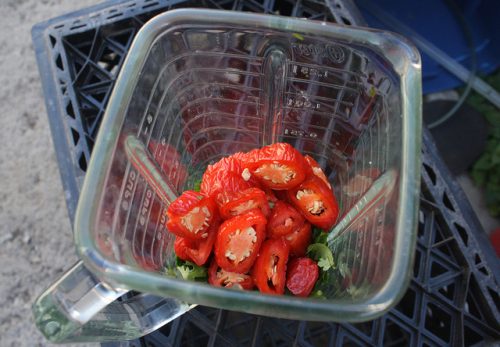
Jalapenos in a blender, before being blended, to make Zhug. Add liquid (lemon/lime juice) to aid in the blending process.
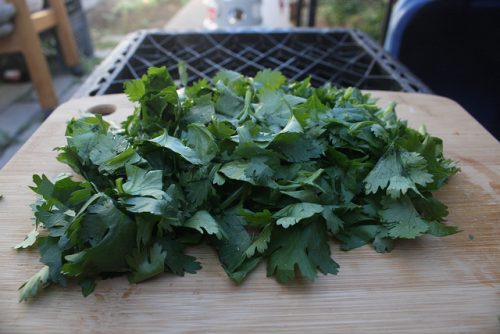
Cilantro, being being chopped up and put in a blender to make Zhug.